Fiber Connectivity for Utilities and Irrigation Districts

Hardened SCADA circuits and substation dark fiber for power providers and irrigation districts — with smart-meter backhaul and financially-backed, carrier-class SLAs across our vast statewide network.
Talk to our Office
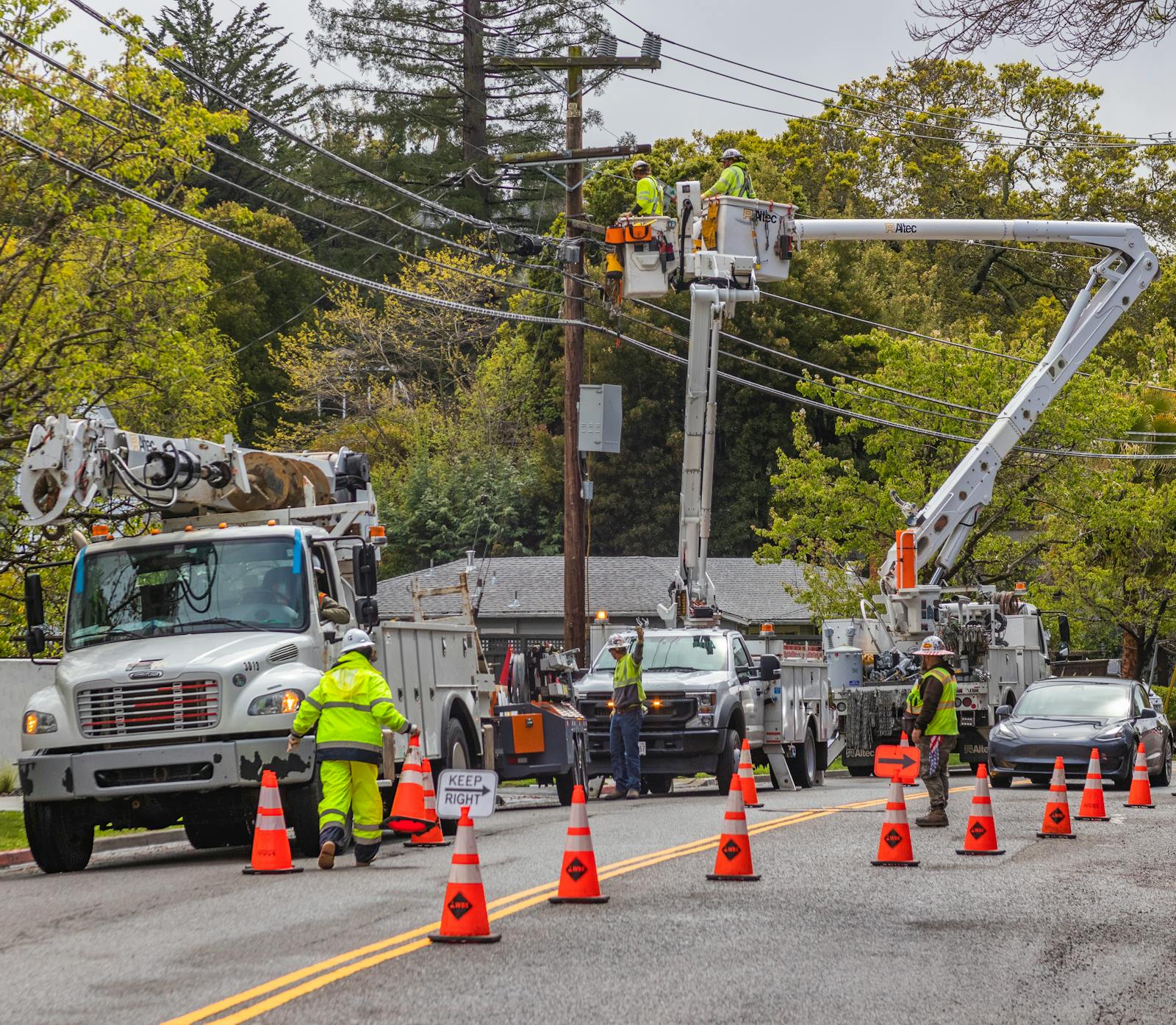
Road works near a utility pole

Utilities runs on the network.

Grid operators and irrigation districts depend on telemetry that can never go dark. SCADA polling, substation communications, and smart-meter backhaul demand hardened paths with deterministic latency — requirements consumer-grade circuits were never built for.

Vast Networks provides substation-to-substation dark fiber, dedicated wavelengths, and monitored circuits over a private backbone we own and maintain. Every service carries a financially-backed SLA and 24/7 monitoring from our California NOC.

Engineered for the work.

The capabilities our utilities customers rely on every day.

Hardened SCADA circuits

Deterministic, low-latency paths for control traffic between operations centers and field assets.

Substation dark fiber

Private strands you light and control end to end, substation to substation.

Smart-meter backhaul

Dedicated capacity that aggregates AMI and telemetry traffic across your service territory.

Monitored, SLA-backed service

24/7 NOC monitoring with financially-backed service levels on every circuit.

Reliability you can build on.

Owned infrastructure and local engineering — not a reseller routing you offshore.

Privately owned fiber

5,000+ miles of underground fiber engineered in California.

Carrier-grade uptime SLA

Financially-backed service levels on every dedicated circuit.

24/7 local NOC

Monitored around the clock by California-based engineers.

California backbone

Low-latency routes across the Central Valley and statewide.

Utilities connectivity questions

Dark fiber or a lit service for substation communications?

It comes down to whether you want to own the optical layer. Dark fiber gives the operator full control of protocol, capacity, and encryption, and suits organisations with the engineering staff to light and maintain it. A lit wavelength or dedicated circuit gives the same private path without that operational burden. Both are legitimate; the wrong answer is choosing dark fiber for control you have no intention of exercising.

What latency can you deliver between substations?

Latency is a function of the physical route, so the only trustworthy figure is the measured one for the specific path we would build. We give you the route, the distance, and the measured latency rather than a marketing number, which matters for anything protection-adjacent where the requirement is a hard limit rather than a preference.

Can you carry AMI and smart-meter backhaul?

Yes — aggregating collector and concentrator traffic across a service territory onto dedicated capacity is a normal use of the network. The traffic is small per endpoint and relentless in aggregate, so the design questions are about aggregation points, growth headroom, and what happens to buffered data when a path is interrupted.

Is route diversity available across a service territory?

In some places genuinely, in others not, and the difference is worth being precise about. Where two physically separate routes exist we engineer and document them as separate; where a second route shares conduit, structure, or a crossing with the first, we tell you, because diversity that exists only on a network diagram is the failure mode it was meant to prevent.

Can we buy strands outright rather than lease?

Long-term arrangements including IRUs are workable on the right routes, and they suit utilities and districts planning around asset lifecycles rather than contract terms. Which routes and on what terms is a conversation with engineering and the commercial team together, since it depends on the specific path and what is already committed on it.

Get started

Ready to go lightspeed?

Tell us where you operate and what you need to stay online. We will take it from there.

Get a Quote